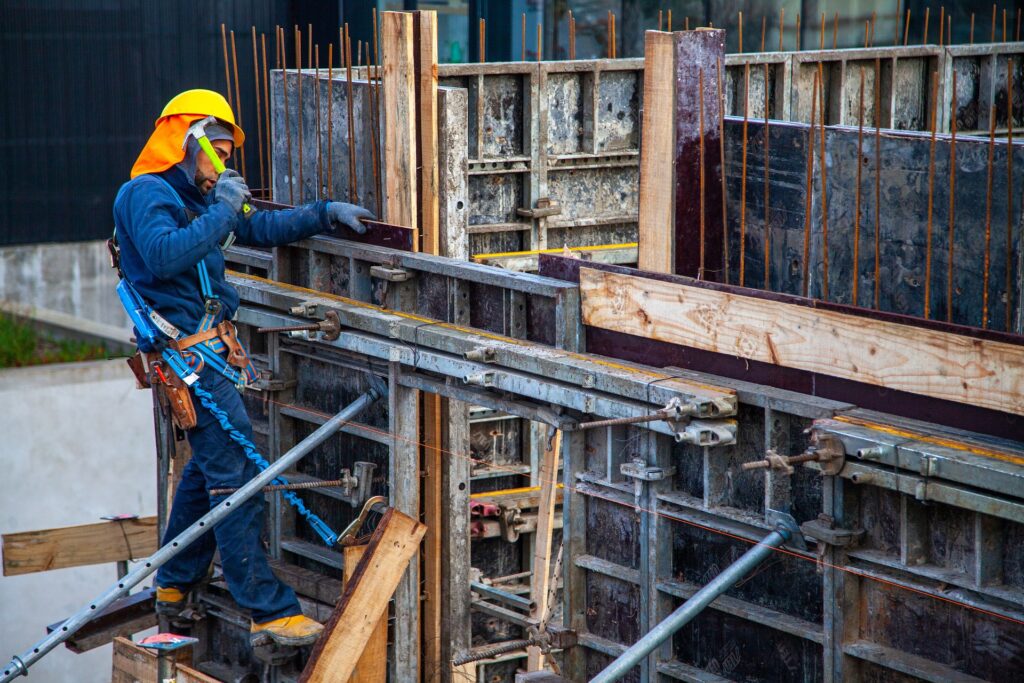
On 7 January 2026, significant amendments to the Construction Law entered into force, aimed at reducing bureaucracy and expanding opportunities for individuals to carry out construction work on their own. The new regulation is particularly relevant for private house builders, farmers, and fisheries operators, as in several cases it will no longer be mandatory to involve a construction merchant, and the requirement to indicate the source of construction financing has been abolished.
No longer required to declare source of financing
One of the most important amendments provides that individuals, when submitting documents in the Construction Information System (BIS), will no longer be required to indicate the source of planned construction financing.
This requirement had been introduced on 1 November 2025 under Cabinet Regulation No. 529 “Building Regulations”, Section 93.2, which obliged individuals to specify the source of financing in BIS. It was introduced as part of the Shadow Economy Limitation Plan 2024–2027 following an initiative by the State Revenue Service (VID). VID and the Ministry of Economics previously stated that this regulation would serve as a preventive mechanism in combating illegal cash flows in the construction sector. However, members of Parliament emphasized that the requirement is disproportionate and does not comply with the presumption of innocence.
Members of Parliament noted that construction projects often last several years, during which the source of financing may change—initially savings may be used, followed by bank loans, inheritance, or other financial resources. Therefore, the obligation to declare the source of financing in advance was considered unjustified. As a result, the provision requiring disclosure of financing sources will no longer apply.
Expanded ability to build without a construction merchant
The amendments also significantly expand the ability of individuals to carry out construction without involving a construction merchant.
Private houses up to 400 m²
An individual will still be allowed to independently construct:
- a one- or two-apartment residential house;
- auxiliary buildings,
provided that the total area of the structure does not exceed 400 square meters.
Initially, the government proposed reducing this limit to 200 m², but Parliament did not support this proposal and retained the existing 400 m² threshold. This means that in private housing construction, individuals may independently organize and carry out construction works without a certified construction merchant.
Relief for farmers and fisheries operators
The new regulation is particularly favourable for agriculture and fisheries. Farmers, fisheries operators, and cooperative societies, regardless of legal form, will be allowed to independently construct farm buildings up to 800 m², such as:
- barns;
- sheds;
- warehouses;
- machinery storage buildings.
For industrially manufactured agricultural buildings, no area limitation will apply, for example:
- greenhouses;
- hangars;
- shelter-type structures.
These changes significantly reduce the administrative burden for agricultural businesses and allow faster implementation of infrastructure projects necessary for operations.
Less construction supervision
The amendments also provide that in cases where the builder is both the construction client and the executor of works, construction supervision will no longer be mandatory.
This means lower costs, as there will be no need to hire a separate construction supervisor. At the same time, all responsibility for the safety, quality, and compliance of the structure remains with the builder.
Changes also apply to military facilities
The law provides that in certain cases, involvement of a construction merchant will also not be mandatory for construction works at military facilities. In addition, the Cabinet of Ministers has been tasked with defining additional cases in special construction regulations where construction may be carried out independently without involving a construction merchant.
What remains mandatory?
Despite the simplifications, several requirements remain in force:
- a construction design is still required;
- in certain cases, a building permit or notification of construction is required;
- buildings must comply with all safety and technical requirements;
- the builder is fully responsible for the safety and quality of the structure.
Conclusion
Overall, the amendments demonstrate the state’s intention to reduce bureaucracy and place greater trust in individuals’ ability to organize construction on their own property. For private homeowners, farmers, and small businesses, this means simpler processes, lower costs, and greater flexibility in managing construction projects.
At the same time, it should be emphasized that even when building independently, it is important to comply with all safety standards and properly prepare construction documentation, as full responsibility for the result lies with the builder.
If questions arise regarding legal or tax aspects of the construction process, professional support may be useful. SIA “Innovator” provides consulting services for businesses and individuals on legal and tax matters.
©INNOVATOR 12.05.2026.